
Your cart is currently empty.




Headlights that dim with the bass. Voltage that sags at every stoplight. Amplifiers going into protect mode. If you've built a serious car audio system on a factory charging system, you already know the factory alternator is the bottleneck. A high output alternator for car audio is how you fix it — here's how to choose and build around one.
Amplifiers are demanding, and they're demanding in bursts. A big system can momentarily pull more current than your entire factory electrical system was designed to deliver. The factory alternator can't supply it fast enough, so voltage drops — and you see it as dimming lights, hear it as distortion, or watch your amps shut down to protect themselves.
The factory alternator isn't defective. It was never designed to run a 2,000-watt sound system on top of everything else the vehicle needs.
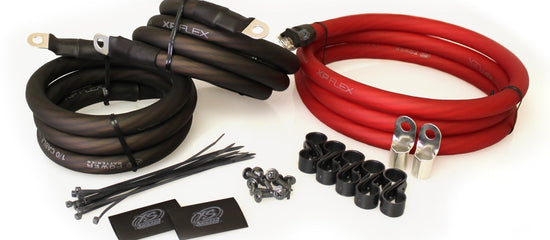
This is the mindset shift that separates a system that works from one that fights itself. Your audio charging system has three parts that must be sized together:
Upgrade only one and the others become the new bottleneck.
The number that matters most is idle output — because the worst-case scenario is your system at volume while you're sitting still.
A rough starting point: serious car audio draws in the neighborhood of 1 amp for every 10–12 watts of real RMS power at hard peaks. Add that to your vehicle's baseline draw (~40–60 amps), add the rest of your accessories, then add 20–30% headroom. (Our alternator sizing guide walks through the full calculation.)
For most real car audio builds, that math lands you in large-case, high-amperage territory — and you want a unit with strong hot-rated idle output, not just a big cruising-RPM number. For GM truck owners, this is exactly the use case the Mechman 400 Amp Alternator is built for: 180–200+ amps at idle and 400+ at cruising, hot rated.
Will a high output alternator stop my headlights from dimming? If the dimming is caused by your audio system out-drawing your charging system — which it almost always is — then yes, a properly sized alternator plus upgraded wiring fixes the root cause. Dimming is a voltage-drop symptom.
Do I need a second battery or just a bigger alternator? They solve different problems. The alternator covers your sustained draw; extra battery capacity covers short, hard peaks. Big systems usually benefit from both — but the alternator is the foundation.
How big an alternator do I need for my system? Size around idle output: real RMS draw + vehicle baseline + other accessories + 20–30% headroom. See our sizing guide for the full method.
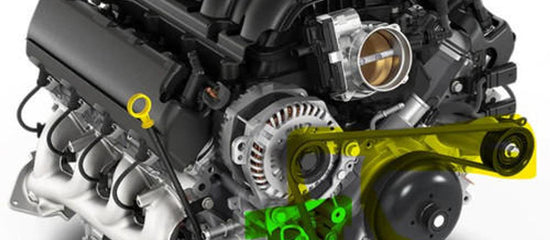
Can I install it myself? The alternator itself is typically a bolt-in swap on an application-specific unit. Most audio builders handle the alternator, Big 3, and amp wiring themselves — just get belt length and fusing right.
Why does idle output matter more than max output? Because your worst case is sitting still with the system cranked. Max output happens at cruising RPM; idle output is what protects you at the stoplight.
A high output alternator is the foundation of a car audio charging system that actually keeps up — but it only works as part of a system. Size the alternator around hot-rated idle output, do the Big 3, match your battery capacity to your peaks, and get the wiring and belt right.
Start with What Is a High Output Alternator?, work through the alternator sizing guide, and if you drive a GM truck, see the Mechman 400 Amp Alternator guide.


Not to worry, we got you! Let’s get you a new password. Please enter your email address or your Username.