
Your cart is currently empty.




Your alternator is the heart of your vehicle's charging system. When it starts to go, the symptoms can be confusing — some look like a dying battery, others like an engine problem. This guide walks through the most common warning signs, how to confirm it's actually the alternator, and what your options are once you know.
Quick refresher: the battery starts your engine, but once running, the alternator powers everything electrical and recharges the battery. If the alternator can't keep up, your vehicle runs down its battery and eventually stalls. That's why a weak alternator and a weak battery produce such similar symptoms — and why people often replace the battery when the alternator is the real culprit.
The classic symptom. If your headlights pulse with engine RPM, dim at idle, or flicker when you turn on accessories, the alternator may not be producing steady current.
Many vehicles have a battery-shaped light or an "ALT" / "GEN" indicator. It doesn't mean the battery — it means the charging system. If it's lit, your alternator output is outside the normal range.
A battery that keeps dying, especially a relatively new one, is often a charging problem, not a battery problem. The alternator isn't replenishing what the vehicle uses.
If the engine cranks slowly or hesitates to start, the battery may be chronically undercharged because the alternator isn't topping it off during normal driving.
Power windows that move slowly, a sluggish infotainment screen, or gauges that flicker can all point to inconsistent voltage from a failing alternator.
A worn alternator bearing can produce a whine or growl that changes with RPM. A loose or glazed belt can add a squeal.
An overworked alternator or a slipping belt can produce heat and an acrid smell. Don't ignore this one.
In later stages of failure, the alternator can't power the ignition system, and the engine stalls — often shortly after the battery's reserve runs out.
With a multimeter, a healthy charging system reads roughly 13.8–14.7V at idle with the engine running. Significantly lower (or wildly fluctuating) readings point at the alternator or its regulator.
Before you spend money, narrow it down:
Option 1 — Replace with a stock-equivalent unit. If your vehicle is bone stock and the old alternator simply wore out, a quality replacement at factory amperage is fine.
Option 2 — Upgrade to a high output alternator. This is the smart move if your alternator failed because it was working beyond its design — you've added a stereo system, lighting, a winch, fans, an inverter, or a plow. Replacing a strained factory unit with another factory unit just repeats the cycle. A high output alternator gives you the headroom your build actually needs, and a quality unit is built with heavier-duty internals that last longer under load.
A failing alternator on an accessorized vehicle isn't bad luck — it's a sizing problem. Fix the sizing, not just the part.
Can I drive with a failing alternator? Briefly, and only if you must. The vehicle runs on battery reserve and will stall once it's depleted — often within a few miles. Don't rely on it.
Is it the battery or the alternator? The multimeter test sorts it out: healthy resting voltage but low running voltage points at the alternator. Both can fail together, since a struggling alternator slowly destroys a battery.
How long should an alternator last? A factory unit often lasts well over 100,000 miles in a stock vehicle — but far less if it's constantly maxed out by added electrical loads. That's the case for upgrading rather than just replacing.
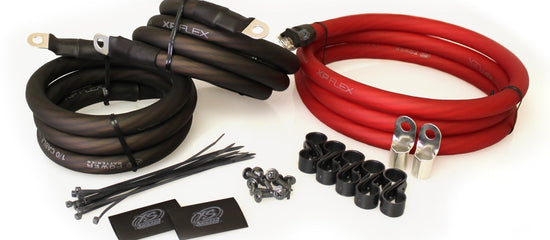
Will a high output alternator fix my dimming lights for good? If the dimming is caused by demand exceeding supply, yes — a properly sized high output alternator plus a Big 3 wiring upgrade addresses the root cause.
Catch the signs early — dimming lights, a charging-system light, a battery that won't stay healthy — and confirm with a simple voltage test before spending money. And if your alternator failed because your vehicle outgrew it, treat the replacement as a chance to size up. Start with What Is a High Output Alternator? or, if you drive a GM truck, our Mechman 400 Amp Alternator guide.


Not to worry, we got you! Let’s get you a new password. Please enter your email address or your Username.